Playing your part

Perhaps I should apologise for my long absence from the blog, but those who know me personally may have seen me blogging professionally elsewhere. I’m pleased at the part I’m playing in my current job, even if it’s not necessarily the job I think I was born to do. It’s rare that I see someone acting in a role I think they were born to play. In this blog I remember saying that I think Judas was a role Tim Minchin was born to play. And I’ve seen David Tennant in some great performances before, but perhaps Macbeth was the role he was born to play.

The Donmar Warehouse production which was screened to cinemas across the UK (and the world?) tonight starred Tennant as Macbeth and Cush Jumbo as Lady Macbeth, and they were both brilliant. Generally (Cush excepted) it was a very Scottish production, fittingly for the Scottish play, and the accents all seemed genuine and the music, black kilts and ceilidh dancing all seemed right on the money. Tennant has great faculty with Shakespeare’s verse, but I’m not sure I’ve seen him portray the range of emotions he did here in other performances.

It got me wondering about other actors I admire, and if there are roles I think they were born to play. Maybe for a versatile actor, it’s not necessarily a compliment to see them made for one particular role. Jodie Comer is so good at accents, maybe Villanelle was the ideal role for her, but I haven’t seen her one woman performance in Prima Facie which was apparently very impressive. I’ve raved about Benedict Cumberbatch in many roles, but perhaps Sherlock is one that seemed most made for him. I loved Andrew Scott in many parts, but perhaps Present Laughter was his tour de force.

Some people write and perform, perhaps partly creating the roles they were made for – Lin Manuel Miranda as Hamilton and Phoebe Waller-Bridge as Fleabag are the ones that spring to mind, but I’m sure there are others. It takes a good set of skills to originate a part you have written for yourself, but maybe you’re more likely to give yourself the chance. Of course, the paucity of good roles for people of different ethnicities recognised within the canon of great plays and films means that some people were typecast for far too long in very limited roles. Maybe this is changing, if slowly.

In church life I’ve been frustrated for years that some roles only seem open to men – unless you’re in the unusually progressive Church of England (or to be fair, Methodists, URC, Quakers…). I blogged before how preposterous it seemed to me that some people might rather receive communion from a robot than from a woman. I’ve developed teaching and leadership gifts in other settings, and some of these skills have been welcomed in church where I have preached and led worship fairly regularly. I’m trying to influence the national church more through my job now, and will be talking to Bishops and more at General Synod next week in one of the fringe meetings.

A recent church service included the appointing of elders (all male) and although I have no complaints about the character of these men who all seem decent and servant-hearted, it did make me pause to consider the very different journey of education, training and curacy that my sister has taken. It is so good to see her appreciated and affirmed by her congregation and I don’t doubt that she is in the place God had for her. During our elder appointing service, a friend at church mentioned Queen Esther being placed where she was ‘for such a time as this’, and encouraging us all to see that God had roles for each of us. The preacher used Romans 16 which recognises so many women who were praised by Paul for their important ministry, even though he didn’t particularly draw out this point. Let us not miss our chance to play the parts we were born to play – and let us not stand in the way of others doing the same.

Posted in church, drama, films, identity | Tagged , , , , , , , , , , | Leave a comment

Watching waters rise

Last week I enjoyed a sunny day at the beach at Troon on the west coast of Scotland.  Being able to get to the beach in less than an hour is one of the delights of my new location, and the fact that the train costs less than £10 return is also very helpful.  On my first visit I walked south to Ayr and saw very few seabirds but lots of jellyfish.  This time I walked north to Barassie beach and saw many more seabirds including some new to me – common redshanks and ruddy turnstones.  I had lunch overlooking a rocky outcrop where there were a large group of shags – black/dark green birds similar to cormorants which are more familiar to me from my local country park in the Midlands.

I realised the tide was coming in and gradually the birds had less and less rock to perch upon, and eventually group by group they started swimming.  I’m not sure whether they had mainly been enjoying the sunshine on their wings or whether it was a good spot for fishing.  Like cormorants their feathers are not fully waterproof so they do need to pose with wings outstretched to dry.  Yorkshire Wildlife Trust also tells me that they can dive up to 45 metres!  They are clearly happy swimming for a while, and I guess there are alternative rocky islands nearby they could find without too much trouble.

I was reminded of the birds this week as I was reading about other residents threatened by rising tides around the world.  I’ve seen maps from Climate Central which have highlighted areas at risk by 2050 with China and Bangladesh having the largest population areas affected although I also pointed out the risks to St Andrews Links golf course in a recent job interview.  I was reading about people in Kiribati where all 33 islands are less than 6.5 feet above sea level.  In her excellent book, ‘Climate Justice’, Mary Robinson talks about how former president Anote Tong had realised the likely fate of their country, particularly as other world leaders argued against measures limiting global temperature rise to 1.5 degrees Celsius because of economic concerns.

Robinson summarises events at the 2009 summit in Copenhagen – COP15 to the upcoming COP26.  She quotes Tong saying

“I told them that anything above one and a half degrees centigrade was dangerous to our future as a people.  When the time comes, I am haunted that the people of Kiribati will be pushed away as they try to scramble onto the life raft”.

(Robinson, 2018:92)

He seems resigned that many of his people will migrate although he has also purchased some land in Fiji (1000 miles away) and is working with engineers exploring floating island possibilities.

Are we just sitting and watching as the waters rise, as I did with my lunch observing the shags and wondering what they would do?  Josh Gauton’s song ‘As The Waters Rise’ felt quite hopeful to me when I first heard it around the time of the Brexit vote in 2016.  Although the verses and chorus are more pessimistic about the reality of waters rising and feeling his head slipping under, the bridge at the end builds with the repeated refrain “I know I have this hope”. ‘Hope Matters’ by Elin Kelsey is another of my favourite environmental books at the moment.  The quote on the cover is from Jane Goodall, the famous primatologist and UN Messenger of Peace:

This book comes at just the right moment.  It is NOT too late if we get together and take action, NOW.

One of Kelsey’s successes is the growth of the #OceanOptimism movement, with stories that inspire ocean activists around the world with evidence-based optimism.

We might not be able to stop the sea level from rising or the ocean from warming and becoming more acidic – reversing these changes would require negative levels of emissions which are beyond even our best projections.  But we can limit these rises, and help countries mitigate for and adapt to the changes if we take collective action to reduce emissions and support climate adaptation.  Kelsey tells about how:

Monterey Bay is healthier now than it has been in the past two hundred years thanks to all the people who have pushed for marine protected areas, fishing regulations, the Marine Mammal Protection Act, and other conservation measures across many decades.

(Kelsey, 2020: 183)

COP26 is a vital opportunity for world leaders to set new targets for reducing emissions, to make serious commitments for actions to meet these targets and to agree financial measures to support poorer countries in climate adaptation. I’m hoping to be involved in volunteering with the coalition of NGOs who will be represented in Glasgow but there are ways to support the events in prayer and raising awareness wherever you are.

Edited to add:

I have just completed a patch for the Coat of Hopes based on these ideas about the waters rising.

Posted in activism, hope, nature | Tagged , , , , , , , | Leave a comment

Scaling a mountain

I’ve reached the summit of a few mountains in my life, both literally and figuratively, although the biggest ones have usually involved significant assistance.  I think I climbed Snowdon (1085m) twice with my family in my youth, once on my Mum’s 38th birthday I’ve been reminded, which would mean that I was 12 at the time.  Although there is a train that can take you all the way up, we walked it on both occasions.

Upper ski lift on Grouse Mountain, Vancouver

In Canada, the route up Grouse Mountain (1231m) is known as the Grouse Grind, and many runners and walkers have scaled this impressive peak overlooking Vancouver without the aid of the large gondolas (oversized cable-cars) and ski lift which my friend and I used.  Apparently most people take about 2 hours to climb it although the record is an amazing 23 minutes and 49 seconds! We used similar transport to climb Sulphur Mountain (2451m) in the Banff area of the Rocky mountains which is described as a difficult hike of around 3 hours.  The altitude affected my friend a bit although the views were spectacular.  I don’t think there’s any way we would have managed it without the gondola.

View from Sulphur Mountain over Banff

More recently I was in the Bern region of Switzerland, and the three high peaks of the Eiger, Mönch and Jungfrau were visible from various train journeys, from our Airbnb in Interlaken, from my Airbnb in Thun and from the Prayer House in the Gantrisch region.  My friend and I looked into travelling up to the Jungfraujoch (3463m) – the highest railway station in Europe which is in between Mönch (4107m) and the Jungfrau (4158m) mountains.  Although we were quite nearby in Interlaken the price seemed prohibitive and we took another cableway and train up to the nearby Mürren (1638m) instead.

View from Mürren looking over to Jungfrau, Mönch and the ridge

After travelling on to Italy and back, I returned to the Interlaken area and took another train route up to Schynige Platte (2076m) which had amazing views over the Brienz and Thun lakes and of the high peaks of Eiger, Mönch and Jungfrau as well. 

View from Schynige Platte with Lake Thun (left) and Lake Brienz (right)

Later that month when I arranged to stay at the prayer house in Gantrisch I don’t think I realised that I would have an amazing panoramic view of these same mountains.  I certainly didn’t anticipate overlooking them for the next three months.

View from nearby hill over Lake Thun to Eiger, Mönch and Jungfrau range

Over this time, the metaphor of having a mountain to climb took on a lot more meaning to me as I contemplated a career change and figuring out where I needed to get to and how it might be possible to get there.  Sometimes the mountain peaks were visible above the cloud but the route to the mountains was hidden in mist.  As I came to know the area more, I realised that although I could spot the Jungfraujoch easily enough if the weather was clear, getting there would involve an hour walk into the village, a bus to the train station, a train to Thun, another train to Interlaken, a train to Lauterbrunnen, a mountain train to Kleine Scheidegg and then another mountain train to the Jungfraujoch station.

View from the Prayer House over mist in the valley

One of the Bible passages which became more meaningful to me over this time was Psalm 121, the one about lifting your eyes to the mountains.  Pete Greig did a great talk on ‘It’s Time To Climb’ during the online 24/7 Prayer Gathering, and I think it was this same event which introduced me to the song ‘Highlands (Song of Ascent)’ as well.  I don’t think I’d previously made the connection that when the people of Israel were singing Psalm 121, it was while climbing a mountain.  It’s one of the designated ‘Songs of Ascent’, and so when the songwriter penned the line about lifting eyes to the mountain, it wasn’t just looking for help, but it was because that was where they were trying to reach.

View from Gantrisch

This made the verses about not letting your foot slip come alive more as well.  Although avoiding tripping is generally helpful, some of the rugged terrain even in the much lower hills had meant that I was aware of the potential hazards.  I had a few near misses where my footing gave way a bit and I was grateful not to take a serious tumble.  Some of the paths in the region were very steep and anxiety provoking.  We didn’t make it up to the summit of the nearer Gantrisch mountain although we did scale a few icy paths nearby on one glorious walking day in late October. 

Psalm 121 A song of ascents.

I lift up my eyes to the mountains— where does my help come from?

My help comes from the Lord, the Maker of heaven and earth.

He will not let your foot slip— he who watches over you will not slumber;

indeed, he who watches over Israel will neither slumber nor sleep.

The Lord watches over you— the Lord is your shade at your right hand;

the sun will not harm you by day, nor the moon by night.

The Lord will keep you from all harm— he will watch over your life;

the Lord will watch over your coming and going both now and forevermore.

Back to the metaphor about climbing a mountain representing my career change, I was feeling like I could see where I felt I was supposed to get to, as I felt more strongly that God was directing me to work for some kind of ocean conservation.  Trying to see the route to get there felt a lot more challenging.  I know I have some transferable skills but my CV doesn’t shout out ocean conservation.  I started off doing some online short courses in sustainable development and have since been doing other courses in Exploring our Ocean and Ocean Science in Action.  I’ve been learning more about marine ecosystems and ocean literacy and volunteering a bit for an organisation working to restore seagrass habitats.

360 view at the Jungfraujoch – peak on the left is Mönch, on the right is the Jungfrau summit

Having realised what a major expedition if would be to get to the Jungfraujoch from the Prayer House I then suddenly had the opportunity to go – travelling by car with some guests who were staying there and who had a voucher for reduced travel on the mountain railways.  On a gloriously sunny November day we drove to Lauterbrunnen and then got the two trains up to the Jungfraujoch centre for less than half the price I’d seen with my friend during my first days in Interlaken. Having spent months taking numerous pictures of the mountains from multiple different perspectives it meant a lot more to me as well.

And it also spoke to me about how sometimes, using the right assistance and the mechanical wonders of Victorian era mountain trains or modern gondolas, scaling a mountain isn’t always as hard as you think.  And the views can be spectacular.

Posted in encouragement, nature, perspective, travel | Tagged , , , , , , | Leave a comment

Protecting our ocean

Programmes like Blue Planet II and the current series, A Perfect Planet are providing amazing footage showing us the beauty and vulnerability of our ocean.  They have also had some success in motivating us to take some action to reduce single-use plastics and other household consumption, but I don’t know if many of us have fully grasped how important this issue is.  One amazing statistic from the latest episode, Oceans, is that plankton in the ocean produce more than half the oxygen in the atmosphere – more than all forests and rainforests combined.  The way that the ocean absorbs CO2 makes it vital in the wider issue of climate change – the United Nations’ Intergovernmental Panel on Climate Change’s Special Report on the Ocean and Cryosphere (frozen components) reported that the ocean has absorbed between 20 and 30% of human produced CO2 emissions since the 1980s.  This has led to increasing ocean acidification which affects some species particularly badly, including corals, oysters, clams and some plankton – the ones which absorb carbon dioxide.

I have long enjoyed taking photos of sea and lake views – something about them has an emotional pull and I know lots of us really value time spent by the sea or in other watery environments.  When I talk about protecting the ocean, I mean the whole water cycle system since it’s all connected from springs, glaciers and waterfalls to streams, rivers, lakes and oceans.  Some authors call this the hydrosphere which sounds a bit futuristic to me, but I’m trying to use the idea that there is one connected ocean rather than several oceans.  Protecting the planet is something that some scientists and environmentalists have been working on for years, but maybe some of us have been a bit slow off the mark, and I include myself here, as well as many of the church communities of which I have been part.

Back in my university days I was chair of our People & Planet society for a year, which had just changed its name from ‘’Third World First’.  I think this was part of moving on from terminology like Third World, but also emphasising the environment part in a way I was honestly less fussed about.  The group campaigned on issues of poverty, human rights and the environment, and my own interest was primarily in the first two sectors.  It seems naïve now, but I think I felt the priorities of helping people who were suffering from issues linked to poverty and hunger or oppressed with abuses of their human rights were more urgent than anything about the environment.  Perhaps environmental campaigners and eco-warriors were taken less seriously in these days before Extinction Rebellion and Greta Thunberg got more mainstream attention. 

Now perhaps some of us are more aware of the massive human impact of climate change and other environmental concerns, and how people in poverty are most badly affected.  Ruth Valerio from Tearfund makes links between climate breakdown and people in poverty, with their health, access to food and security all being affected:

“As global temperatures rise, rains are becoming less reliable and droughts, floods and storms are becoming more frequent and extreme.
For those who are already vulnerable, this is a life-threatening emergency that is pushing them further into poverty. The climate crisis is a justice issue.”

As I’ve been researching more, I got caught up in a lot of information about climate change and the need to cut emissions, and the importance of the upcoming COP26 event in Glasgow where world leaders will report progress on the targets set at the 2015 UN conference in Paris, and will set new goals for being carbon neutral (Net Zero).  It’s good to think that Joe Biden’s US government will be properly represented here now, although some Governors from Michigan and Massachusetts were already part of the preparatory Climate Ambition Summit held online in December.

Met Office helpful presentation of some of the key IPCC Special Report data

However, my primary focus remains protecting our ocean (and the hydrosphere), partly because I feel like that’s what God has put on my heart but also because I am being persuaded that this is a vital part of work to combat climate change as well as protecting the people and species who depend on the ocean (which is all of us, but coastal communities, flood-risk areas, and those whose water is badly polluted are some of the more starkly affected).

Alongside the importance of reducing emissions, most obviously linked to fossil fuel use but also agricultural, industrial and waste processes, organisations aiming to protect the ocean such as the Wildlife & Countryside Link coalition of NGOs and Surfers Against Sewage have both made strong cases for the importance of rewilding, restoring and protecting carbon sinks including saltmarsh, seagrass and sea-kelp environments, drawing on evidence about ‘blue carbon’ from the Benyon review of Highly Protected Marine Areas. The recent Wildlife & Countryside Link document: an Ocean Recovery Manifesto sets out 6 important areas for action:

  1. A minimum of 30% of our seas are fully protected by 2030
  2. Carbon sinks are restored and protected
  3. Sustainable development prioritises the recovery of the marine environment
  4. Fisheries are sustainable and fully integrated with wider marine protection measures
  5. Management of marine, freshwater and terrestrial environments is integrated
  6. Plastic and chemical pollution are reduced at source

While there are important individual contributions we can make towards ocean conservation and reducing our own environmental impact, see for example this list of suggestions collated by the Blue Planet II team, all of these areas also require policy change and government enforcement which mean that the best strategic actions we can take will be campaigning and seeking to influence big companies and governments. For a start, WWF have a petition linked to Ocean Recovery you could sign?

Personally, I am very aware of the impact that church communities could have if we took these issues more seriously.  Initiatives such as Eco-Church can help us to get our own houses in order, considering the environmental impact of our buildings, investments and energy use and some denominations have made big strides in this area.  But I wonder how much more we could change if we consider the Biblical mandate to take care of God’s creation, to care for the poor and to let rivers truly represent the life-bringing, healing power of his Spirit and the ocean to show the wideness of his mercy.  If Christians really do constitute around a third of the people on the earth, surely there are enough of us to make a difference, alongside other concerned citizens of our shared planet.

This blog is already getting long so I’ll write another soon making the Biblical case in more detail.  What do you think?  What would it take to convince you to take more action to protect our ocean?

Posted in activism, church, justice, nature | Tagged , , , , , , | Leave a comment

Waiting to emerge

One of the books I’ve been reading during this time of trying to decide what comes next in my life has been ‘When the heart waits’ by Sue Monk Kidd.  Recommended by a friend it contains lots of helpful ideas to think about, particularly for people in a period of transition or waiting.  One of the key images she uses is that of a chrysalis, where a caterpillar lies seemingly dormant until they emerge as a beautiful butterfly.  In her example the chrysalis stage seemed to last for months, and the changes in her own life took a period of maybe a year or more so I felt like I was perhaps rushing the book reading it a chapter a day, even though I was making notes.

Looking it up now, it seems most butterflies are in that chrysalis stage for about 10-14 days but I found more about black swallowtail butterflies which suggests they can be in a chrysalis all winter, up to 9 months or more.  Returning to her description of the butterfly which emerges in the final chapter of the book, it seems to match this black swallowtail pattern, black wings with orange and blue dots. Rather different to my favourite blue ones.

After some enjoyable weeks travelling in Germany, Switzerland and Italy visiting more tourist locations at quite a rapid pace, I was glad to return to Switzerland for a more restful time.  I’ve been staying in a prayer/community house between Bern and Thun for just over a month now and it seems like an ideal place to be waiting on God, praying and reading and researching as well as contributing to the life of the house with some leading worship, gardening, cooking and cleaning. I had been keen to travel to Canada but each month I’ve found that the borders are still closed due to Covid-19, and I’ve settled on Switzerland as a good alternative for now with lakes, mountains and a prayer community to join.  I wasn’t keen to go to Canada for the winter – even the grizzly bears there hibernate from around November to April, waiting until the warmer spring weather to emerge from their cosy den. Maybe a lot of people are feeling like they are entering enforced hibernation during the winter lockdown; stocking up on essentials and not going out much.

I can’t say I feel quite like a butterfly or a grizzly bear but I do feel like I’m waiting for some sort of shift or revelation.  I do feel like I have some ideas of what God is saying might be next for me, and it’s not so much a dramatic transformation as settling in to things he’s been saying for a long time.  I am grateful to have some time to rest and take stock and eat nice food, without having to rush into a new job.  It’s been good to have more time and space to pray, although one of the things from Sue Monk Kidd which struck me most clearly was about waiting with Jesus while he prays.  She writes:

“The emphasis isn’t on what we’re doing but on what God is doing.  Ultimately we don’t heal, transform or create ourselves.  We posture ourselves in ways that allow God to heal, transform, and create us.  The posture of sitting while Jesus prays reminds us that the Spirit is active and speaking.  Our part is to learn to sit, yielding to God’s activity in us, opening ourselves to divine prayer, listening to the silent words.  As Father Michael,  monk at the Abbey of Gethsemani, said to me, “Ultimately, waiting is letting God be God.”” (p134)

So although there is more I could say about what might be happening, mainly I’m still waiting.  The tension between waiting for it and going for it is a key theme within the musical Hamilton, with Aaron Burr singing that he’s ‘willing to wait for it’ while Hamilton is more keen to emphasise how he’s “young, scrappy and hungry and [he’s] not throwing away [his] shot”.  Lin-Manuel Miranda managed to balance both of these necessities, to wait and to act in the commencement address he gave at his old Uni Wesleyan in 2015.  The whole speech is great but I’ve tried to link directly to 9:29 where he makes the most direct comparisons, moving on to 14 mins where he explains “In reality, you’ll always be rushing and waiting at the same time”.

In these autumnal mornings, the mountain view from my windows isn’t often visible.  I have to wait for the mist and fog to clear from the valleys, and some days I don’t see past the edge of the nearby wood.  Other days the peaks are visible for a while, then the mist rises and clouds cover them again.  Even when I can’t see them, I believe that the mountains are there, in the same way that I believe the sun is still there on a cloudy day and that God is still there even when I can’t see him.  The sun will emerge from behind the clouds and the mountains will emerge again from the mists, and they are both worth the wait. 

In Psalm 27, David talks about seeking God’s face, and asking Him to teach him His way and lead him in a straight path.  He concludes:

I remain confident of this:

I will see the goodness of the Lord in the land of the living.

Wait for the Lord; be strong and take heart and wait for the Lord. Psalm 27

Posted in encouragement, hope, nature, perspective | Tagged , , , , , | Leave a comment

Being more reckless

Reckless is one of those words where the opposite form has fallen into disuse – we don’t talk about having more reck, or more ruth, or more feck.  ‘Reck’ is an archaic word meaning care, and care is something that’s generally to be recommended.  But when IMG_2252you’re playing online free poker, it’s the end of the night and you don’t much care whether you win or lose, playing recklessly is amazingly fun.  And so far it’s a strategy that has ‘paid’ off, and I ended up with an imaginary pile of 11,000 imaginary credits, having beaten both the rest of the regular players and the ‘zombie’ players who we’d already beaten earlier in the game but who our generous host (plagued by heinous luck all night, he’d have us know) had allowed to re-enter the game with another 1000 imaginary credits.

When it happened the first time two weeks ago I felt like it could provoke a blog, and it wouldn’t be the first time a game of poker inspired me.  Generally I’m known as quite a responsible person and that’s a helpful trait for a church trustee and safeguarding officer.  Having a mind of the potential consequences is very important part of those roles, and it’s something I know I can handle with some competence.  However, unlike some, I don’t actually think I thrive on being responsible.  It does not bring me joy.  My personality tendency is more towards spontaneity and open possibilities than routine and settled decisions.  In Myers Briggs terminology, my preference is towards P rather than J, although I generally avoid talking about my p-ness for more than the obvious reason.

I can plan a good lecture, but I have felt more alive the times when I’ve had to wing itIMG_0141 because someone else has called in sick or when we’ve completely changed the lecture style.  I can write thoughtful emails but I’d rather have an unexpected conversation where I have to respond to someone in the moment with compassion and clear answers to questions I hadn’t anticipated.  The extreme Myers Briggs P-type is easily bored and flits from thing to thing, and while we’re socialised away from this being acceptable, I can see these traits in my enthusiasms for things which come and go, and my resistance to making five year plans or monitoring my own finances with the care I have applied to church accounts.

Quitting my job without a new job to go to or any other fixed plan would seem pretty reckless to most people, and I know I am privileged to have the financial freedom to do this.  There is also a freedom in not having dependents which means that I’m making the decision for myself rather than needing to consider a partner and children.  I was due to leave my job the day before yesterday, and to fly on Thursday next week although the Covid-19 situation meant that my flights were cancelled and my marking has come in more slowly than expected.  I decided not to end my employment with my paid annual leave but am working to the end of the month instead, having more time to finish my marking and taking payment for the annual leave instead.  So far, so responsible.  I don’t want to risk catching or spreading the virus and I’m not about to travel against Foreign Office advice.  So far, so responsible.

I do want the freedom to take opportunities which come up, and to do some different things.  I loved interrailing back in 1999 – being in Madrid and wondering whether to go south to Seville or west to Caceres was an amazing feeling, and I didn’t regret my choice even though I’d love to go to Seville one day.  I can plan a good holiday, but in the event, it’s been easier to cancel a few things than a whole detailed itinerary.  My blank diary for July onwards isn’t too scary – or maybe just a good kind of scary.  I’m still pleased to be getting out of higher education for now.

There’s a song that’s been popular in the church for the last few years called Reckless Love.  Cory Asbury from Bethel released it in 2017 and I wasn’t too sure of it to start with.  The chorus goes:

Oh, the overwhelming, never-ending, reckless love of God
Oh, it chases me down, fights ’til I’m found, leaves the ninety-nine
I couldn’t earn it, and I don’t deserve it, still, You give Yourself away
Oh, the overwhelming, never-ending, reckless love of God

IMG_0090editCalling God irresponsible seems a bit daft, and yet, the whole biblical story alluded to here when the shepherd leaves 99 sheep to search for the one who has gone astray could be called reckless.  This parable told by Jesus in Luke 15 talks about the Father’s joy and rejoicing in heaven when he finds  the one who had gone astray, which Isaiah said was all of us (Isaiah 53 v 6).  Perhaps it could be argued that God sent Jesus to earth in a way that didn’t protect him from all the consequences of suffering and death.  It’s hard to say that a God who knows everything, is all-powerful and is outside of time can truly be irresponsible, and yet he does give agency to human beings.  CS Lewis discusses the dignity of causality from the ideas of Pascal; how God allows our prayers and actions to affect and effect things, which could be seen as a certain release of control (OK, I got this from Pete Greig’s Prayer Course really).  There’s perhaps an occasion when a good parent allowing a child some responsibility for a choice could be described as irresponsible.  Either you keep all the responsibility for yourself and allow the less mature party no responsibility, or you release some responsibility (even while retaining the overall responsibility for a child’s wellbeing which comes with being a parent).

I’m not fully sure about this one, and others have made a strong case that the Reckless Love song is unbiblical, see Georgi Boorman.  I think there are times for extravagance, like the woman who poured perfume on Jesus’s feet who could have been described as reckless and was certainly blamed by more responsible church finance types who calculated what could have been done with the money.  Avoiding all risks isn’t healthy, as I argued in a previous blog.  I’m not about to argue for a total disregard for consequences during a pandemic, even as some of my neighbours display behaviour I might call reckless.  But always going for the choice that seems responsible and safe doesn’t sound quite like the Jesus who turned over tables in the Temple and said things that angered the Pharisees so much that they plotted to kill him.  Maybe if we’re obeying God, then the consequences are his responsibility and we can have a bit less regard for them.  I’m not arguing against making prudent choices based on the wisdom he gives us, but I don’t think life following Jesus was or should be boring or predictable.

Some of the protesters challenging Police brutality and racism since the murder of George Floyd are being called reckless, but if they’re being non-violent and observing social distancing then I think that’s legitimate and important demonstration and solidarity.  People serving God around the world have made choices that others would call reckless.  Hopefully they do it in a way that is close to God’s will and where they will see his blessing and protection, but that’s not always the case and some of them will know the truth of Jesus’s words:

For whoever wants to save their life will lose it, but whoever loses their life for me will find it. (Matt 16 v 25)

I’m not wanting to be irresponsible with my life as I travel or explore new possibilities, but I do want more of the feeling of doing something exciting and vibrant and challenging, both to me and to the injustices of the world that I encounter.  Those zombie poker players look like they are competition, but actually they are already finished.  They can’t win.  The enemy is defeated and Jesus already has the victory.

I have told you these things, so that in me you may have peace. In this world you will have trouble. But take heart! I have overcome the world. (John 16 v 33)

Posted in activism, identity, perspective, prayer, teaching, travel | Tagged , , , , | Leave a comment

Blessing the NHS

I wasn’t convinced about the idea of street-based clapping for the National Health Service.  I found the points about the need for more practical testing and PPE as rather more beneficial for our NHS staff than a spattering of applause and pot banging.  I did feel more moved by the videos of The Blessing which have been shared massively online.  Most of my readers will have probably seen The UK Blessing,


but maybe you’d be interested to view The Pittsburgh Blessing, The Blessing South Africa, The Malaysia Blessing, The Blessing – Canada, The Blessing Zimbabwe, La Bendición – Latinoamérica, The Hawaii Blessing, The Blessing [Kids]

Blessing is an important and positive act, especially during difficult times.  Some years ago I heard a great preach from Russ Parker and enjoyed his book ‘Rediscovering the ministry of blessing’ where he speaks about the power in blessing people to flourish and know God’s closeness and purposes.  He describes situations of breakthrough following prayer for blessing in circumstances including family estrangement, chronic illness and times of hopelessness.  Perhaps it feels simplistic to pray God’s blessing on nurses, doctors, healthcare assistants, cleaners and all the other staff who keep the NHS running, but it also feels important.  I am deeply thankful to have a nationwide health service which is designed to be free at the point of use to everyone who needs it (even though some migrants’ access is unfairly denied).

There was a time before it existed – the fight to establish the NHS was hard as captured in Martyn Joseph’s great song Nye in honour of Aneurin Bevan, the post-war Minister of Health.  Opposed by many in the Conservative opposition, his own Labour party and the British Medical Association, the National Health Service Act was passed in 1946.  Bevan had been a miner in the local Welsh colliery, was active in their miner’s lodge, gained a scholarship to the Central Labour College in London and was elected an MP aged just 31.  He was 49 when the NHS Act passed, and he went on to be active in Housing Reform as well.  He died in 1960 following stomach cancer aged 62 in his house in Chesham in Buckinghamshire.  The dream which brought the NHS to birth is still ‘alive and strong’ sings Joseph, and probably seems like a dream in much of the world where health care relies on expensive insurance payments for those who can afford it.

image2

Remembering this makes me thankful, but I was even more thankful earlier this month when a freak accident meant my housemate and I needed assistance from our local Accident & Emergency department.  We were trying to reattach the shower door which had come off its runner, and it smashed to tiny pieces all over us.  Despite being covered with glass, my housemate escaped with only minor cuts to her hands and feet but I had a deeper cut in my hand which bled quite a lot and needed 5 steri-strips and dressings which meant my hand was bandaged for a week.  I managed most things left-handed but had to wait for a while before playing the guitar again, when I attempted my own version of Nye for the Open Micsolate group on Facebook.


I am thankful today that I didn’t lose more use of my thumb, or the digit itself.  The paramedic did check whether we’d lost fingers or toes when he called us back, after asking several questions about any symptoms of Covid-19.  It could have been so much worse.

IMG_9218redI was very thankful for my other housemate who administered some impressive first aid, called 111 and drove us to hospital.  I was thankful to the nurse practitioner who laughed with me and seemed pleased to have a proper wound to attend to.  During an extremely quiet period in A&E which meant we were out within 40 minutes, I was glad of the chance to express my thanks and encourage the staff who helped me, even while my housemate was praying for another patient and her family member outside.  I was thankful to whatever angel was watching over us which meant we weren’t more badly injured, and thankful to whoever invented safety glass (apparently it was an accident by Edouard Benedictus, a French scientist in 1903).

And two days later, I was glad to join with others on our street in applauding the NHS, IMG_9260even if I was limited to slapping my thigh with my left hand that week.  I still see the arguments that this isn’t enough, and that Conservative politicians and others are using it as a PR opportunity even while failing in so many areas.  But it feels good to come together in an act of positive appreciation, and good to have a moment of more obvious community on my street.  Part of what I love about the UK Blessing video is the way that it united over 65 very different churches across the UK, and has now been viewed nearly 3 million times.  Along with supporting staff practically and following advice, if we come together in blessing and prayer I believe we can change history, see a virus defeated and see healing in our world.   Come on.

Posted in church, connecting, hope, music, prayer | Tagged , , , , , , , | Leave a comment

Walking with me

west wingIt took me over a month of lockdown to decide that it was time to get out The West Wing box sets, and I’ve been watching from the beginning again. Wow, but they all look so young, and the screen is 4:3 which seems very strange now. I binge-watched it all in 2006 when I was off work sick, and I’m not sure now whether it had an influence in the big career change I made later that year. Perhaps seeing characters working for something they really believe in does encourage you take stock of your own life choices, a bit like some of my musings after watching Hamilton. I’ve heard Lin-Manuel is a big West Wing fan – see a brief history here (including some great videos I hadn’t seen before).

The other reason I returned to The West Wing was thinking about the notion of walking with someone, as the long tracking shots they use as people bustle through the White House corridors while delivering quick-fire dialogue are a trademark of the creator/writer Aaron Sorkin and director Tommy Schlamme. In episode two, Chief of Staff Leo invites the doctor Morris: “Take a walk with me, will you?” Leo is the one who uses the term most, although President Bartlet also uses it a couple of times. It indicates that they are busy and productive, walking and talking to get things done; visually presenting progress and generally creating more dynamic television than two people sitting or standing in a room and talking. There’s a lot of walking and talking in the West Wing which features heavily in this montage:

I’ve heard a couple of good sermons in the last week about Jesus meeting the disciples on the Emmaus Road and walking and talking with them,  explaining what had happened and how it fitted with the scriptures before they only realised it was him when he broke bread at their meal. The idea that Jesus is Immanuel, ‘God with us’ is a key theme of Christmas readings but it’s also been in my head a lot lately. As we go through the Covid-19 pandemic, the idea that God is walking along with us, not just looking down from on high is a comfort. At first a key theme I was hearing was about being still and knowing God is God (see Psalm 46) which is important, but actually Jesus talks a lot more about following him. If we’re bustling round with distractions then being still is a great first step, but God doesn’t leave us to be still, he invites us to walk with him.

Enoch and Noah were two men in the Bible who it says ‘walked with God’, and right back at the start of Genesis God was walking in the garden with Adam and Eve. I love the verse in Micah which says:P1013031edit

He has shown you, O mortal, what is good.
And what does the LORD require of you?
To act justly and to love mercy
and to walk humbly with your God.

Back in Leviticus, God made a covenant with the people of Israel with consequences for obedience:

I will put my dwelling place among you, and I will not abhor you.  I will walk among you and be your God, and you will be my people.

These verses are then quoted in other scripture including 2 Corinthians 6:16 as key for believers, who are earlier described in this chapter as God’s co-workers. It’s an amazing thought that God invites us to walk with him and be part of what he’s doing in the world. Not that this should be a burden, or pressure to take us out of resting in his presence as well, but that we can take steps together with him.

One of the key ‘Be still’ verses in the Bible comes in Exodus 14, before Moses parts the Red Sea. Moses declares to the people that they will be delivered, they will never see these Egyptians again:

13 Moses answered the people, “Do not be afraid. Stand firm and you will see the deliverance the LORD will bring you today. The Egyptians you see today you will never see again. 14 The LORD will fight for you; you need only to be still.”

But the very next verses include God commanding action and movement:

15 Then the LORD said to Moses, “Why are you crying out to me? Tell the Israelites to move on. 16 Raise your staff and stretch out your hand over the sea to divide the water so that the Israelites can go through the sea on dry ground.

Similarly Psalm 37 which talks in verse 7 about being still before the Lord and waiting patiently for him has many more verses about committing your way to the Lord, trusting him, doing good, God making our steps firm, hoping in God and keeping his way. More recent songwriters have also taken up the theme about walking with God. Bryan and Katie Torwalt’s song ‘Remember’ has the lines:

And oh my soul
Remember who you’re talking to
The only One who death bows to
That’s the God who walks with you
And oh my soul
You know that if He did it then
He can do it all again
His power can still raise the dead
Don’t tell me that He’s finished yet

And Tim Hughes and the team at Gas Street have a new song as well, Immanuel:

Hallelujah, you are my strength
Hallelujah, my one defence
Hallelujah, my song will be:
Oh praise the God who always walks with me

This new song fitted really well with Nick Drake’s talk about Emmaus Road (later in the same video). His main points were about how humbly Jesus walked along the road with the disciples, their companion as they voice their confusion instead of trumpeting his victory. Consistently, God offers to walk with us, whatever we’re going through. We need a revelation of his presence with us and he will transform our lives.

P1002496edit smallAs I’m thinking about the next steps in my life, and a new direction as I leave my job, I want to be walking with Him. Even more than I expected, I’m not sure where I’m going. My initial travel plans to Canada and Europe seem much more in doubt now, and the projects and friends I hoped to visit as I contemplated a new direction may not be available to me. I’m happy to spend a while being still – a rest after all the marking will be most welcome, particularly if the weather and local walking is as pleasant as it has been earlier this month. But I’m also praying that the right opportunities will come up, whether volunteering or some way of travelling or a job option. I’d love some prophetic words and sky-writing but if they don’t come I will take some tentative steps, try some metaphorical doors and see what God says.DSCF0344

This is what the Lord says:

“Stand at the crossroads and look;
ask for the ancient paths,
ask where the good way is, and walk in it,
and you will find rest for your souls.   Jeremiah 6:16

I’m pretty sure this passage inspired the song made famous by the Waterson’s, The Good Old Way,  here in a version by Eliza Carthy and the Ratcatchers which I mentioned in a previous blog as well. Wherever I walk, I think there will be singing.

Hallelujah, my song will be:
Oh praise the God who always walks with me

Posted in drama, hope, travel | Tagged , , , , , , , | 2 Comments

Seeking new life

I’ve felt a bit conflicted in the last week or so.  Although the news has continued to get mainly worse about covid-19 in the UK and other countries where it is spreading fast, my own week of annual leave has been generally very pleasant with lovely weather, wonderful walks and wildlife spotting and some great food and time with my housemates.  While I have kept in touch with the news and some very moving stories of people losing loved ones, it has seemed important to focus on signs of new life in the world around us and the resurrection story of Easter as well.

P1002521editP1002542editSq

Visiting my local green spaces more regularly has meant I have been aware of the birds I have been photographing starting to have babies.  The herons were first, and my new zoom lens that I was longing for last summer has really come into its own.  Then my housemate spotted that her favourite great-crested grebe in the park had babies too, and again it was the zoom that meant I could capture the amazing stripey heads they have.  Lots of people had been mentioning the mallards which also had babies in our local country park.  Easter Monday I went back there and was delighted to photograph them as well, and I’ve also seen coot babies (and have edited to add these – ever so coot!).  Even the cows have got in on the act and there are a couple of calves in the local field as well.

On Easter Sunday my housemates and I walked to the lake which is part of the RSPB reserve on the edge of the country park.  We had been celebrating Jesus’s resurrection in the morning via online church meetings, at least one of which included an invitation to receive the new life Jesus offers by praying a simple prayer acknowledging the mistakes we have made, thanking Jesus for dying for us and asking him to be lord in our life going forward.  Easter is the most important event of the church year and this might have been the first year that I had not been in a church on Easter Sunday, but God was still with us as we spent time together enjoying his creation.  Local bird-watchers pointed out lapwings and oyster catchers (while remaining an acceptable social distance from us) and we also saw an egret and jay which I had not seen in that park before.  On Monday while photographing the ducklings the same chap pointed out the swallows and house martins above us, which have recently returned to the area from their winters in warmer climes.  Yesterday I saw a goosander and shoveler when I ventured back to the lake again.

All this new appreciation for birdlife around me and my local walk possibilities are good things that have come out of the enforced limits on my other usual activities of being out with more people, whether at the cinema, folk club, church events or shopping.  I know other people have even less freedom, being restricted to stay indoors as they are shielded from anyone who might expose them to the virus due to their underlying health conditions.  One friend in this group in particular has been encouraging me to share the pictures I am taking to get a taste of the outdoors and places he would love to be visiting.  We’ve also been considering as a church how we can take this time of uncertainty and for some, less busyness, and focus on loving God and praying more, seeking more of his will in our lives.  As some of the clutter is stripped away and we see what is really important, maybe many people will be finding new priorities as we move on from the lockdown into whatever comes next.

pan IMG_3150I had already been feeling a dissatisfaction in my job situation, and have already put the wheels in motion for some big changes here.  I had been planning some major travels and time to figure out what’s next in my life, considering where God might want me to live and work in the future.  World events mean that most of my travel plans may not now be possible, but I have decided to trust that it is right to move on and hope that new opportunities will open up, whether these involve some more local volunteering or travel to somewhere where I can self-quarantine as needed for the requisite time before being suitably helpful to mean the travel is allowed.  This all feels like an additional layer of uncertainty beyond the covid-19 situation, and I am grateful for the finances which mean I can even consider leaving a job where I have a steady income at a time when others are losing their jobs and financial security.

Whatever worries we are facing at the moment, whether they are financial, health-related, concern for loved ones or despair at our politicians, I hope we can know God is with us and he cares.  I like the various mentions in the Psalms of us being sheltered in the shadow of God’s wings.  Even Jesus, as he approached Jerusalem before his arrest and death, looked out at the city and longed to “gather [their] children together, as a hen gathers her chicks under her wings”(Matthew 23:37).  Psalm 91 says:P1002528editSq

Surely he will save you
from the fowler’s snare
and from the deadly pestilence.

He will cover you with his feathers,
and under his wings you will find refuge;
his faithfulness will be your shield and rampart.

Even within the covid-19 stories, there are some encouraging ones of people who have been treated in hospital and have recovered.  I hope they return to their normal lives with a new zest for living and determination to make the rest of their days count for good.  And even when we lose loved ones, sometimes this can also remind us how precious life is, and that we must not waste it.

Posted in hope, nature | Tagged , , , , , , , , , , , | Leave a comment

Performing during pestilence

Maybe you’ve seen the stories that say Shakespeare wrote King Lear while he was under quarantine for the plague.  Or that Isaac Newton invented calculus, theories of optics and gravity during the Great Plague of 1665.  I’ve seen people encouraging Lin-Manuel Miranda to crack on and write a new masterpiece even while I’m disappointed that the theatre closures and lockdown mean that my nephews and I won’t be seeing Hamilton over Easter.  We enjoyed the Zoom call the Hamilton cast made to one lucky girl though!

Zoom is a whole new world for me, and I have been impressed at the way it allows group meetings, distance computer support and even a kind of lecture from the comfort of my own study.  Some of my colleagues have been more resistant but I generally enjoy trying out new technology.  I think it’s been more successful than some of the discussion forums I tried to launch, and those who didn’t manage to join us have the option of watching the video afterwards.  Lots of us are pulling new skills out of the bag, whether it’s home-schooling, virtual church or just managing a Skype call.

I’ve enjoyed seeing some musicians I love performing live-streaming gigs, including Nerina Pallot (live on Thursdays 8pm), Yvonne Lyon (still available) and the Indigo Girls.  I also enjoyed the National Theatre Live YouTube screening of One Man, Two Guvnors (until 7pm 09/04/20) with James Corden in the lead role and a broadcast of the film version of Joseph and the Amazing Technicolor Dreamcoat.  Sharing nice entertainment via Facebook seems to be a good service in these days; brightening up people’s feeds and days and promoting some artists who deserve more recognition and potential sales as well.

The last three Saturdays some friends and I have done some performing of our own, starting with a good laugh Skyping the Shakespeare play Twelfth Night.  I know this wouldn’t be everyone’s idea of fun, but it was suggested by a friend I used to live with, and we’d actually read some plays together back ten years ago when she was in the UK.  We’d seen a marvellous production of Twelfth Night at Stratford with Richard Wilson playing Malvolio and he was so funny.  She’d even bought a copy of the script in two languages.  I managed to recruit another friend from university who had hosted some play enactments in her room in halls over twenty years ago…  I divided the parts between the three of us, and with a bit of creative use of accents and some talking to ourselves in some scenes, we had a merry time.  I had never noticed quite how many references to plague and pestilence crop up in Twelfth Night, but you can bet we noticed every one now. http://shakespeare.mit.edu/twelfth_night/full.html

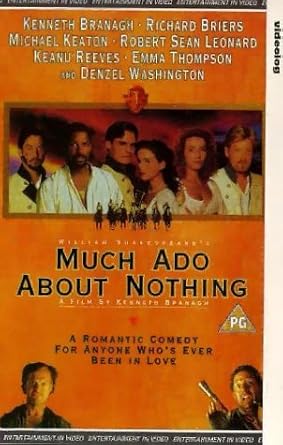
A group of five of us then tried Much Ado About Nothing over the next two weekends, and we’re recruiting more people for next Saturday too.  There have been some dodgy accents, some baffling phrases and even a few changes of hats.  My Benedick owed more than a little to Kenneth Branagh, but some of them were too young to have seen that version which I recalled owning on VHS tape… I know my friends are facing different challenges at the moment, from bereavement to separation from loved ones and a wedding under threat of delay.  But it was good to leave the worries of the present days and travel back to a whole lot of entertaining ado about what turned out to be nothing.

Even the duck was busy conducting…

It’s actually been a very busy few weeks for me, trying to find new ways to work from home and still support the students as best we can.  I know that keeping busy can help me to avoid thinking about the challenges facing us during a global pandemic, but I know that rest is also important at this time.  I hope over what would be the Easter holidays, people can take a break from home-schooling and feeling the need to fill every waking hour with something stimulating.  It’s been good to enjoy local walks and a bit of sunshine, and to spend a bit more time cooking some nice food.  While others are performing key worker tasks to keep us safe and medically cared for, supplied with food and other essential services, maybe the most helpful role I can perform is that of a compliant citizen who stays at home, upholding others in prayer and helping out when I can.  And if I can help cheer someone’s day by singing a song or pretending to be drunk, then I’m amply prepared for that.

Posted in connecting, drama, music, perspective | Tagged , , , , , , , , | Leave a comment